Disposable vape waste: the real weight of it
A few hundred puffs, a few days of use, then the bin. Behind its toy shop styling, the single use device left a physical trace that British pavements, kerbside bins and sorting halls absorbed without ever being designed for it. A cell, a circuit board, a moulded shell: every unit concentrates materials that do not break down. Disposable vape waste did not stop being a problem when the shelves were cleared, because the units already sold are still working their way through the system.
What disposable vape waste is actually made of
A device the size of a highlighter pen holds a lithium cell, a small circuit board, moulded plastic, a metal contact assembly and the residue of a nicotine salt e-liquid. That combination places it squarely in the electrical waste stream rather than in general rubbish.
Government guidance is unambiguous on the classification. Defra states that vapes are electrical items, whether single use or reusable, which means they are covered by the Waste Electrical and Electronic Equipment Regulations.
The classification matters because it changes who is responsible. An object that counts as electrical equipment carries obligations for the people who sell it, not only for the person who finishes it, and those obligations survive the product itself.
The volumes are what turn a small object into a national problem. In its May 2025 briefing on the ban, the Defra environment blog cited a Material Focus estimate that almost five million single use vapes were either littered or thrown away in general waste every week in the United Kingdom.
Why disposable vape waste is so difficult to treat
Recyclable on paper is not the same as recycled in practice, and this format stacks up several obstacles at once. The problems begin at the moment of disposal and continue all the way to the separation of materials.
The first obstacle is the cell. It is bonded into the body and cannot be removed without tools, which rules out the quick manual separation that a small appliance would normally get at a collection point.
The second is the mix of materials. Plastic, metal, a circuit board and liquid residue in one sealed unit require dismantling that resists automation, and automation is what makes a recycling stream economically viable at scale.
The third is safety. Recycleyourelectricals, the campaign run by Material Focus, warns that lithium batteries hidden in binned electricals are a fire risk in bin lorries and waste facilities, which is precisely why these devices must never go in a general waste bin.
Defra makes the same point in its business guidance, stating that unsafe storage of vapes or improper disposal is a fire risk and that vapes should be disposed of in vape bins only, then collected regularly for recycling.
The take back duty most shoppers never hear about
There is a legal route for these devices, and it runs through the shops that sell them. It is one of the least publicised consumer rights in the category.
Under the WEEE Regulations, as summarised in Defra guidance, any business that sells vapes counts as a distributor and must offer a take back service. That means accepting vapes and vape parts returned by customers for recycling, including used pods, coils and batteries.
The duty was written to survive the ban rather than to expire with it. The same guidance is explicit that take back covers single use vapes handed back by customers after the prohibition began on 1 June 2025.
Enforcement sits with the Office for Product Safety and Standards, which the guidance says may take action against a seller that has no way to recycle vapes and vape parts safely. In other words, a shop without a vape bin is not merely unhelpful, it is exposed.
Why the ban did not close the file
Withdrawing a product from sale does not retrieve the units already in circulation, and that is the whole nuance of the current period. The stock sold between 2021 and 2025 is still reaching the end of its life somewhere.
Britain outlawed the sale and supply of single use vapes from 1 June 2025, a measure we set out in full in our explainer on what the ban changed. That decision closed the tap on new units entering the market.
It did not empty the pipe. In April 2026 the Natural World Fund reported that more than six million vapes and pods were still being thrown away every week in the United Kingdom, a figure that folds in the reusable devices and replacement pods that took the old format’s place.
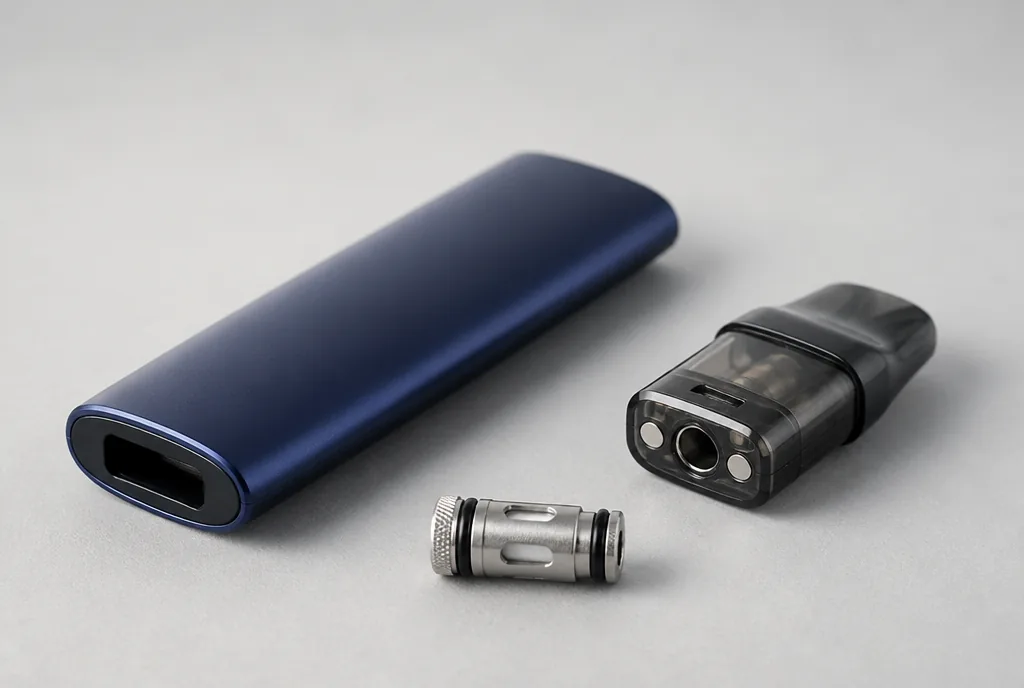
That last point is the uncomfortable one. Moving the market to rechargeable hardware reduces the number of complete devices discarded, but it creates a steady flow of a smaller consumable, the pod, which is itself plastic, metal and a coil.
What reusable hardware actually changes
The arithmetic still favours the rechargeable device, provided the comparison is made honestly rather than on the marketing copy. One body recharged and refilled for months replaces a long run of complete units, cell included.
That is the structural gain. The lithium cell, the circuit board and the outer shell stop being consumables and become durable parts, while the item that turns over regularly is a pod or a coil weighing a fraction of the whole.
The gain is real but partial. A prefilled pod with a bonded coil remains a mixed material object that ends up in the same electrical stream, so the improvement is one of degree, not a clean break. Our review of the formats that replaced disposables sets out where each one sits on that scale.
For anyone buying a first device with this in mind, the relevant question is how often the consumable turns over rather than what the body costs, which is the reading we apply in our guide to choosing a first kit.
Sorting behaviour, still the weakest link
Regulation can create a route without creating the habit of using it, and this is where the chain keeps breaking. The take back service only works if a device is carried back rather than dropped.
The behavioural problem was built into the product. A colourful, low cost object that arrived pre charged and empty of any instruction read as a consumable, not as an appliance, and consumables go in bins.
The consequence is visible on any British high street verge. Shells that do not decompose release plastics and metals into soil and water, while the cell inside remains a hazard for anyone who compacts or punctures it.
Nothing about that changes automatically now that sales have stopped. Disposable vape waste already in households will only reach a proper stream if it is walked back to a vape bin, one device at a time.
Frequently asked questions
Where should a used vape be taken in the UK?
To a shop that sells vapes or to a local collection point for electrical waste. Defra guidance requires vape sellers to operate a take back service accepting devices, pods, coils and batteries.
Can a disposable vape go in the household recycling bin?
No. Kerbside recycling is not set up for embedded lithium cells, and Defra guidance states vapes should be disposed of in vape bins only, then collected for recycling by a registered service.
Why are the batteries considered a fire risk?
Recycleyourelectricals warns that lithium batteries crushed or punctured inside bin lorries and waste facilities can ignite, which is why hidden cells in binned electricals are treated as a hazard rather than a nuisance.
Did the 2025 ban stop the waste problem?
It stopped new single use devices reaching the market from 1 June 2025, but the Natural World Fund reported in April 2026 that more than six million vapes and pods were still being binned weekly.
Are shops legally obliged to take old vapes back?
Yes. Under the WEEE Regulations as described in Defra guidance, a business selling vapes is a distributor and must accept returned vapes and vape parts, with the Office for Product Safety and Standards able to act if it does not.
What the numbers leave behind
By packing a lithium cell, mixed plastics and electronics into a short lived object, the single use format exposed a blind spot the sector had never had to answer for: what happens at the end. Disposable vape waste made the end of life question unavoidable, and the ban answered only half of it.
The half that remains is collection. Units already sold will keep surfacing in drawers, pockets and hedgerows for years, and the only mechanism that catches them is the take back duty sitting with every shop that sells a vape.
For the Observatoire, the volume of disposable vape waste returned rather than binned is the metric worth watching from here, more telling than any sales figure, because it is the one that says whether the rules written in 2025 actually reached the pavement.
Editorial content for adult readers only. Vaping products usually contain nicotine, a substance that causes addiction. Not for sale to under-18s in the United Kingdom. This article is not a buying recommendation.